Icon of Saint Ephraim Katunakiotis 20X26cm crafted in the Byzantine style. The icon is wooden, flat in a classic ecclesiastical design, gilded with a special technique that makes it more brilliant than gold printing. With a traditional red border and made of MDF wood, it makes it durable over time. It is specially processed and varnished to have maximum resistance to time and wear.
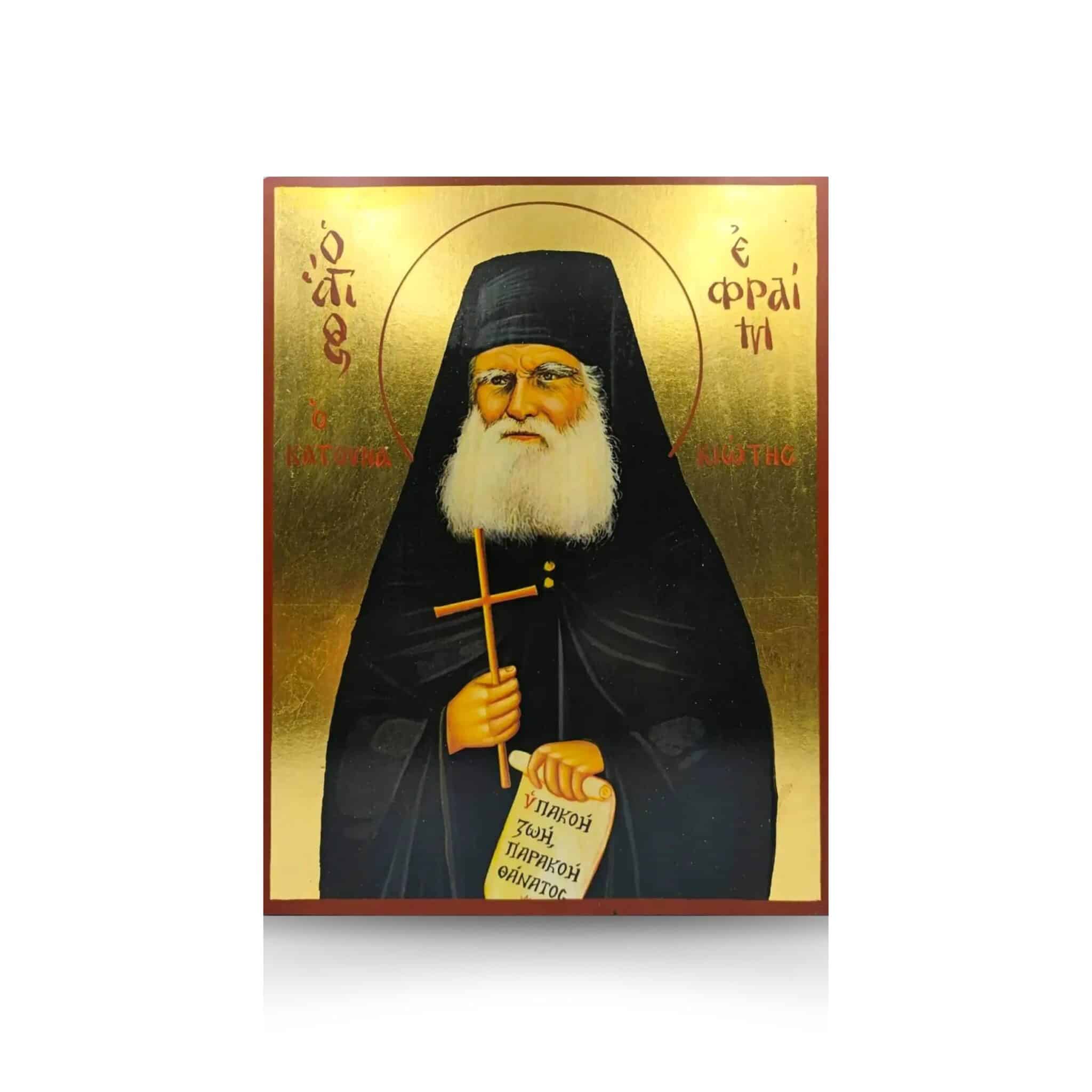
Icon of Saint Ephraim Katunakiotis 20X26cm
20,00 €
1 in stock
Description
Icon of Saint Ephraim Katunakiotis 20X26cm crafted in the Byzantine style. The icon is wooden, flat in a classic ecclesiastical design, gilded with a special technique that makes it more brilliant than gold printing. With a traditional red border and made of MDF wood, it makes it durable over time. It is specially processed and varnished to have maximum resistance to time and wear.
Saint Ephraim Katunakiotis was born in 1912 AD. in Ambelochori, Thebes. His father's name was Ioannis Papanikitas and his mother's name was Victoria. The Elder had the secular name Evangelos. He finished high school, but God's Grace was closing the secular doors of restoration to Evangelos.
In Thebes, where his family had moved, Evangelos met cerrandadeof Ephraim and Nicephorus.
The life of Evangelos was callous. They were fighting spiritually with the wish of Jesus, penances, fasting and above all with obedience.
His mother claimed to receive information from Saint Ephraim of Syros (see January 28) that her son's will to become a monk was also God's will and how the Gospel will honor the monastic life.
On September 14, 1933 AD the Evangelist left the world and came to the desert of Mount Athos in Katounakia, to the sanctuary of Saint Ephraim of Syros and did penance in the company of the Elders Ephraim and Nikephoros. After his ordeal he became a small monk named Longinos. In 1935 AD he was made a grand monk by the Elder Nicephorus and received the name Ephraim. The following year he was ordained a Priest.
Saint Ephraim was honored and met the rector of the hesychast life, the insightful, proactive and holy Elder Joseph the Hesychast (see August 16) and was spiritually connected with him with the blessing of the Elder Nicephorus. Elder Joseph in turn had been taught the simple spiritual life by the famous hesychasts monk Kallinikos and Hieromonk Daniel. Therefore Saint Ephraim teaches us the persistent search for the spiritual life and the finding of a simple spiritual guide, which will be "Precise versions of the orthodox faith". The simple spiritual sees the demonic backs and with the proper spiritual medicines leads his spiritual children to Heaven.
Saint Ephraim separated genuine obedience from sick obedience when he advised a synovial monk to obey his Elder not like an animal but out of love and zeal for God.
Saint Elder Joseph the Hesychast gave a program of hesychast life to Saint Ephraim, to cultivate the wish "Lord Jesus Christ, son of God, have mercy on me", to have a prison of the senses and led him to the purification of the heart and divine illumination.
Saint Ephraim, with the blessing of Saint Elder Joseph, immersed himself in the "Philokalia of the Holy Bridegrooms" and received the advice of the Bridegroom Fathers for his struggle. He neither read books on psychiatry, nor "cultural" readings through intellectual demonstrations in salons, nor was he afraid of being called a "fundamentalist" by secular circles.
In 1973 AD Hieromonk Nikiforos the Elder of Holy Ephraim fell asleep.
Saint Ephraim after 1980 AD he had assembled a retinue and followed the order of the Holy Elder Joseph to obtain a retinue after the death of Pope-Nicephorus. Therefore Saint Ephraim first reached purification and then became an Elder himself. Saint Ephraim fought the great enemy of spiritual life, vanity. His sacrifices were made for Christ and not for expected praise from people.
The Mass for St. Ephraim was a shocking and experiential event. He had confided in his spiritual friend Hieromonk that from the first Divine Liturgy he celebrated, he could clearly see the Grace of God changing the divine gifts. In fact, after the consecration of the holy gifts, he saw Christ himself inside the disk and it was impossible to hold back his tears when he reached the dismemberment of the Body of Christ. He used to rain the antimensio with his tears during the Divine Liturgy and he saw the angels on the right and the left concelebrating.
But St. Ephraim never referred to a "liturgical revival" and even asked synovians, who were in external ministries, not to skip the psalter.
Saint Ephraim was adorned with the clairvoyant gift and saw the spiritual condition of every cleric or monk and gave the appropriate spiritual medicines for progress in spiritual life.
The Grace of God had also graced Saint Ephraim with the prescient gift, which is why he saw situations that were coming (such as the earthquake of 1977 AD in Thessaloniki), but also many times he had addressed the laity and even small children with the names they received after years in their lonely heart. In fact, a student sent a brief and detailed letter to the blessed Elder and received a reply from Saint Ephraim, who described his spiritual condition in detail, even in the place where the student lived without him having mentioned them.
Once unknown to each other clergymen met on the road to Katounakia and when they reached Saint Ephraim, the blessed saint Gerontas began to scold one of the clergymen, how he is not a priest but a mason, who put on a cassock to spy on the Holy Mount. The mason admitted his ruse.
Saint Ephraim lived experiences that only Orthodox Christians can live, far from papal or protestant delusions.
Once an abbot, two theologians and a student asked Saint Ephraim to explain to them the fragrance of the holy relics. The Saint bowed his head to the place of the heart and prayed. The place was filled with fragrance and Saint Ephraim told them how because he could not explain it himself he begged God to answer the interlocutors. Saint Ephraim felt sins like stench. A certain bishop through a third party asked the blessed saint Elder about ecumenism. The Elder prayed, so that God would inform him, and then a stench poured out with a sour, salty and bitter taste, which filled him with disgust.
Saint Ephraim's bequest for the unity of the Orthodox was clear "Schism is easy, union is difficult". How much resonance do the words of a God-bearing modern Father have today?
Saint Ephraim emerged with the Grace of God and a practical guide in the pastoral care of marriage and the family, because he helped many young people to end up in marriage without pressuring them for it, but also his letters, which have been preserved, are a spiritual legacy and "school parents' without psychological and philosophical theories about spiritually struggling families.
In 1996 AD Saint Ephraim suffered a stroke and fell immobile. He did not grumble at all but praised God. He leaves us his holy example for dealing with diseases.
On February 27, 1998 AD Saint Ephraim the Katunakiot of Mount Athos delivered his sanctified soul into the hands of his Creator, whom he served from his youth.
They say how they once asked an elderly man, living in the 19th century AD, to tell the most shocking event of his life. The elderly man replied that when he was young he saw and heard Saint Cosmas Aetolos. And our own generation deserved to know the fertile flowers of Athonian Monasticism, the Holy Elder Paisios and the Holy Ephraim Katunakiotis, who invite us to follow their lives.
More information
| Weight | 1,4 m. |
|---|---|
| Size | 26x20x5 cm |
Related products
-
 Out of Stock
25,00 €
Out of Stock
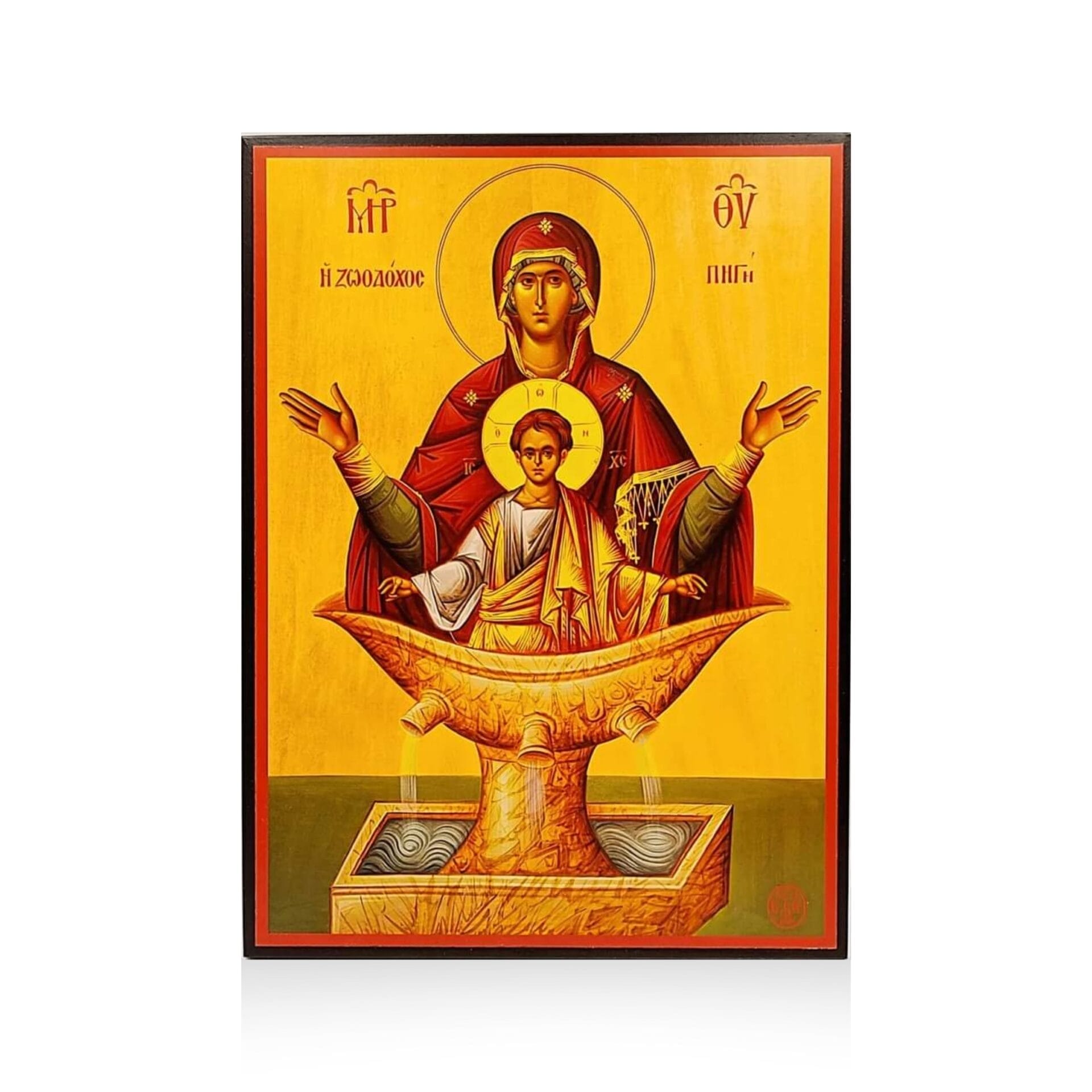
25,00 €Icon of Zoodochos Pigi Wooden 23X17cm Holy Monastery of Xenophon. Copy of an image from the workshop of the Holy Monastery of Xenophon with certification.
-
 Price range: €5,00 through €150,00
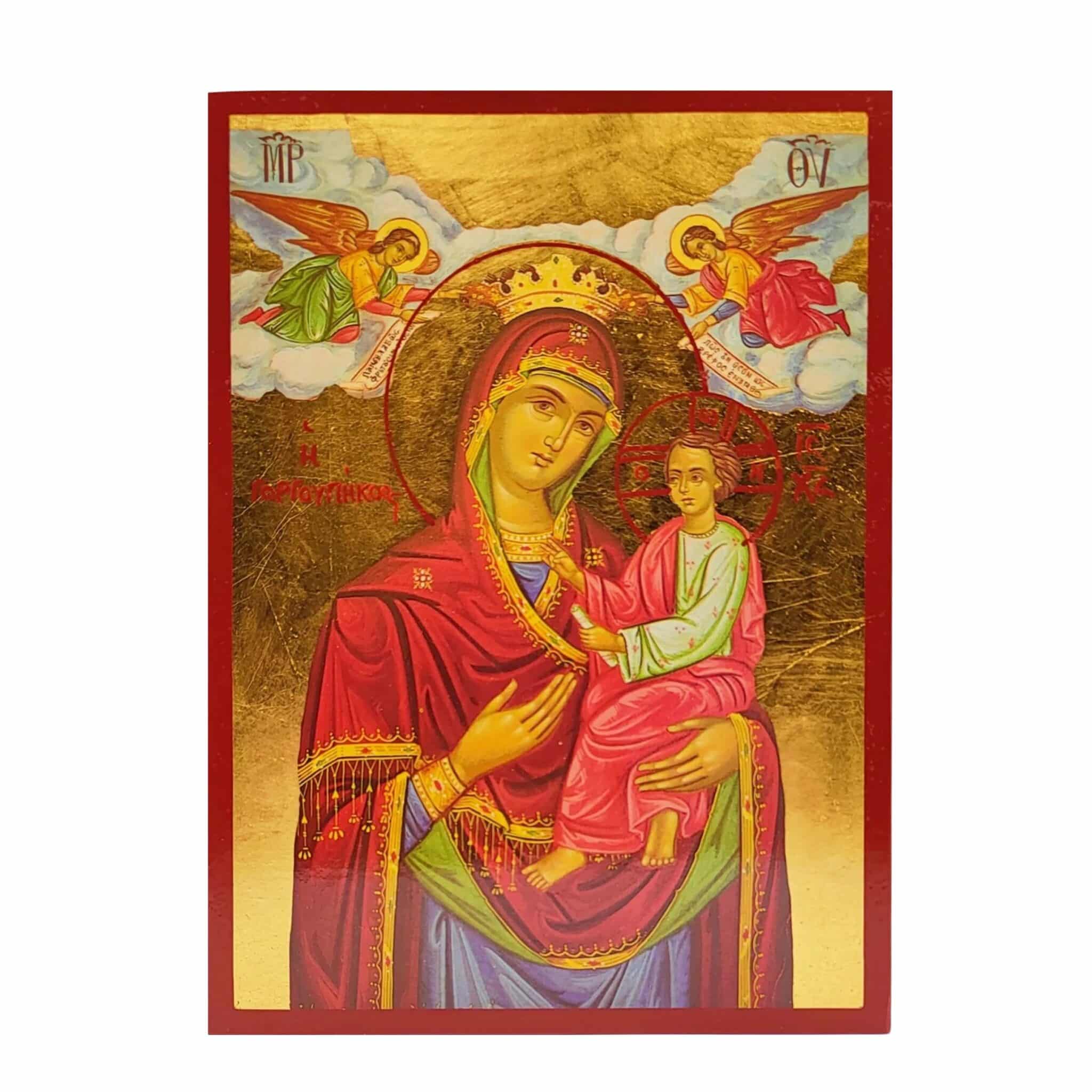
Panagia Gorgoupikoos Icon 20X26cm Wooden Gilded. Ecclesiastical icon of Panagia Gorgoepikou crafted in the Byzantine style.
Choose This product has multiple variations. Options can be selected on the product page -
 Price range: €5,00 through €150,00
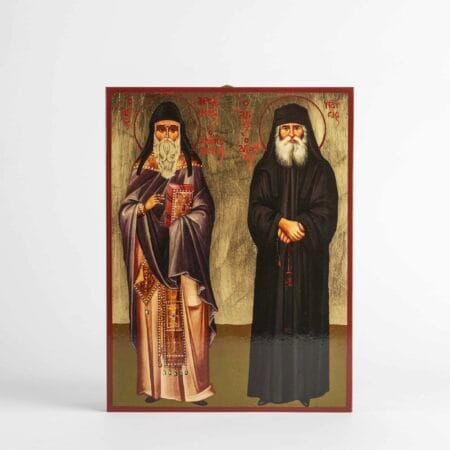
Saint Arsenios and Saint Paisios Icon. Ecclesiastical icon of Saint Arsenios and Saint Paisios, crafted in the Byzantine style.
Choose This product has multiple variations. Options can be selected on the product page -
 100,00 €
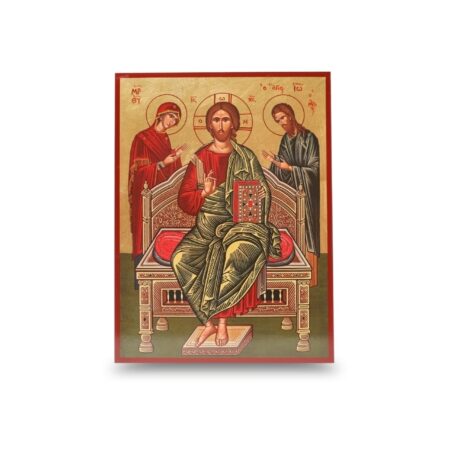
Icon of Deesis 40X30cm Wooden Gilded. Ecclesiastical icon of Deesis crafted in the standards of the Byzantine style. The icon is wooden, flat in a classic ecclesiastical design, gilded with a special technique that makes it more brilliant than gold printing. With a traditional red border and made of MDF wood that makes it resistant to the passage of time. The image is specially treated with varnish to have maximum resistance to time and wear